
Cold Snaps at the Shore: What to Check When Temperatures Drop Overnight
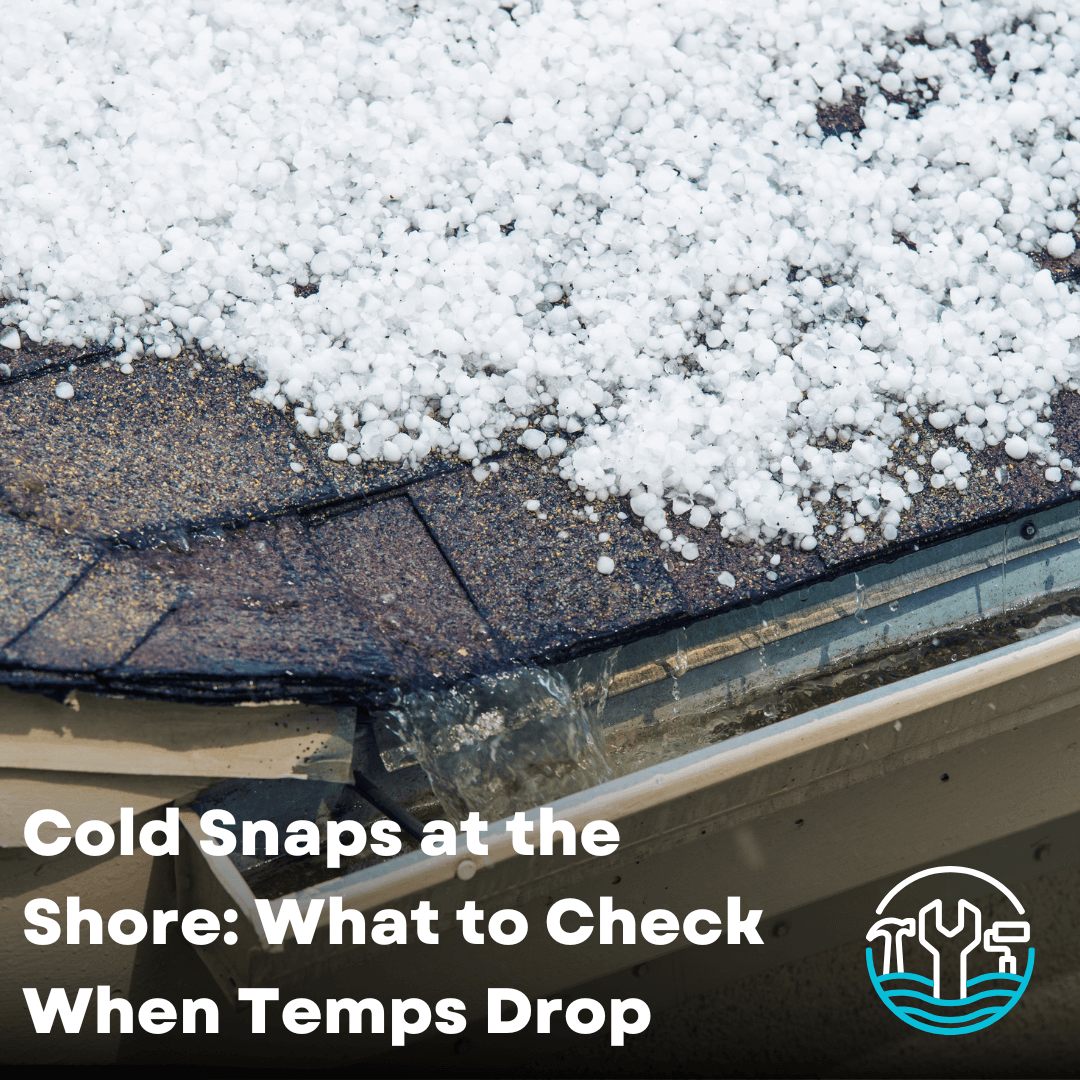
Winter at the shore doesn’t always arrive gradually. One mild day can quickly turn into a sharp overnight temperature drop, catching homeowners off guard. These sudden cold snaps are often when frozen pipes, heating issues, and unnoticed drafts cause the most damage—especially in seasonal or lightly occupied homes throughout Cape May and Atlantic Counties.
A few proactive checks can help prevent costly repairs when temperatures dip faster than expected.
1. Check Exposed and Exterior Plumbing First
Outdoor lines and exposed pipes are the most vulnerable during sudden cold snaps. Even one freezing night can cause water left in a line to expand and crack fittings.
What to check:
- Outdoor spigots and shower valves
- Pipes in crawl spaces or garages
- Utility rooms near exterior walls
]If you haven’t already drained and shut down outdoor fixtures, now is the time. Even homes that are “mostly winterized” can have overlooked lines.
2. Make Sure the Heat Is Actually Working
A thermostat reading doesn’t always tell the full story. During cold snaps, heating systems are pushed harder—and failures tend to show up when temperatures fall overnight.
Quick checks:
- Is warm air reaching all rooms evenly?
- Are any rooms noticeably colder than others?
- Has the system been serviced recently?
Uneven heat can signal blocked vents, dirty filters, or failing components that should be addressed before colder stretches settle in.
3. Watch for Drafts You Don’t Feel Until Winter
Drafts often go unnoticed during mild weather but become obvious when temperatures drop suddenly. Cold air entering through small gaps makes your heating system work overtime and can create moisture issues near windows and doors.
Areas to inspect:
- Window frames and sliding doors
- Exterior doors and thresholds
- Attic access points
Sealing drafts improves comfort and reduces heating costs throughout the winter.
4. Look for Early Signs of Moisture or Condensation
Cold snaps can cause condensation to form quickly, especially in bathrooms, kitchens, and poorly ventilated spaces. Left unchecked, this moisture can lead to mildew or damage.
Be alert for:
- Foggy windows that don’t clear
- Damp smells
- Moisture on walls or ceilings
Bathroom fans and proper ventilation are especially important during winter use.
5. Don’t Forget Vacant or Less-Used Spaces
Guest rooms, lower levels, and garages are often overlooked but can be the first places problems show up during overnight freezes.
Check:
- That heat is reaching these spaces
- That doors are open enough to allow airflow
- That no plumbing lines are exposed to cold air
For homes that sit vacant during the week, these checks are critical.
Why Cold Snaps Are Risky for Shore Homes
Shore homes face unique challenges in winter. Salt air accelerates wear, many homes sit unoccupied, and coastal weather patterns bring quick temperature swings. Small issues that might be noticed immediately in a primary residence can go unseen for days or weeks at a second home.
How Shore Handyman Can Help
When temperatures drop unexpectedly, peace of mind matters. Shore Handyman provides cold-weather checkups, seasonal maintenance, and winter prep services to protect shore homes before damage occurs. From plumbing inspections and draft sealing to heating system checks and storm monitoring, we help homeowners stay ahead of winter problems.